L-linke Communication B1 Grade Flame-Retardant High-Speed Network Cable
GB 31247 B1 Grade Low-Smoke Halogen-Free Flame-Retardant High-Speed Network Cable
Introduction: Low-smoke halogen-free flame-retardant B1 grade cables have passed stringent national standard tests. They release almost no toxic gases or dense smoke when burning and are self-extinguishing, providing fire safety assurance for high-rise buildings, data centers, and other similar locations.
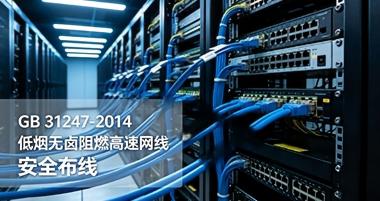
To meet these requirements, L-linke Communication, together with testing institutions, conducted dozens of research and development efforts, ultimately meeting the technical requirements of China Railway and China Shipbuilding.
Low-smoke halogen-free flame-retardant (GB 31247 B1 grade) high-speed network cables are a type of special electrical wire and cable with extremely high fire safety standards. They combine the three core characteristics of low smoke, halogen-free, and flame retardant, and have passed the stringent B1 grade combustion performance test in the Chinese mandatory national standard GB 31247-2014.
Here's a detailed breakdown of the characteristics, core specifications, and application scenarios of high-speed network cables:
Key Terms Breakdown
Low Smoke Halogen-Free (WD):* Halogen-Free: The insulation and sheathing materials of the network cable do not contain halogen elements (such as fluorine, chlorine, bromine, etc.). During combustion, it does not produce highly corrosive halogen acid gases, effectively protecting precision electronic equipment and building structures.
Low Smoke: The smoke concentration produced during combustion is extremely low, with high light transmittance. This greatly increases the chances of escape in a fire and facilitates fire rescue.
Flame Retardant (Z): The network cable has the ability to prevent or delay the spread of flames. Once the fire source is removed, the network cable can self-extinguish, preventing the fire from spreading rapidly along the line.
GB 31247 B1 Grade:* This is China's mandatory grading standard for the flammability performance of cables and optical fibers. The standard classifies flammability performance into four grades: A, B1, B2, and B3. Grade B1 belongs to "flame-retardant" materials, representing the highest flame-retardant grade currently required in civil buildings.
Core Performance Indicators for Grade B1
To meet GB 31247 Grade B1, high-speed network cables must pass rigorous multi-dimensional testing. Core requirements include:
Extremely low calorific value: Total calorific value (PCS) must be ≤ 2.0 MJ/kg, meaning minimal heat release during combustion, reducing the likelihood of fueling a fire.
Limited flame spread: In a single-wire vertical combustion test, the char height cannot exceed 1.5 meters.
Extremely low smoke production: Light transmittance (smoke density) during combustion must be ≥ 60%, ensuring visibility in a fire.
No burning drips: No burning drips or particles that could ignite objects below must be produced during the test (within 1200 seconds) (d0 grade).
Extremely low smoke toxicity: The toxicity index of the gases produced during combustion is extremely low (typically requiring t0 or t1 grade), significantly reducing the risk of poisoning and asphyxiation.
Materials and Technical Principles
The high fire resistance of these cables is primarily due to their special material formulation:
Halogen-free flame retardant system: Inorganic metal hydrates such as aluminum hydroxide (Al(OH)₃) or magnesium hydroxide (Mg(OH)₂) are typically used instead of traditional halogenated flame retardants.
Cooling and isolation mechanism: When the cable encounters fire, these inorganic materials decompose and absorb a large amount of heat, lowering the cable surface temperature. Simultaneously, they release water molecules for further cooling and form a hard metal oxide crust, which acts like an "armor" around the cable core, isolating it from oxygen and thus inhibiting the combustion reaction.
Combustion-resistant sheath: High-quality B1-grade network cable sheath material rapidly forms a hard shell layer after combustion, preventing the internal insulation material from participating in the combustion.
Typical Application Scenarios
Because B1-grade cables maximize personnel safety and minimize property damage during fires, relevant national fire protection standards (such as the "Code for Fire Protection Design of Buildings" GB50016) mandate or strongly recommend their use in the following locations:
Super high-rise buildings and Class I high-rise buildings (such as skyscrapers, high-end office buildings, and residences)
Densely populated public places (such as large shopping malls, schools, hospitals, stadiums, and exhibition halls)
Important transportation hubs (such as subway stations, airports, and train stations)
Locations with strict requirements regarding smoke toxicity and corrosiveness (such as data centers and precision instrument rooms)